

In memory of my father
There is one project I did not take on as a designer, but as a daughter.
My father was, like me, an immigrant from South America. In Uruguay he had his business, his place, his pride. When he arrived in Israel near the age of 60, none of that was waiting for him: he could not reopen a shop, ended up working minimum-wage security, fell into debt, and slowly lost everything — his home, his status, his marriage. One day I got a call telling me he had been found sleeping on a bench in a park in Ra'anana.
I was nineteen, a new immigrant trying to build myself, and I did not know how to help him. I told him about a shelter; he took it as an offense and chose to go back to the bench, to the street. That was almost our last conversation. Years of silence followed, and then the final goodbye. For a long time I could not understand how someone could prefer the street to a roof.
Years passed. I built my family, my studio, my life. But every time I handed over a home designed down to the last detail, worth hundreds of thousands, the same image would return: my father, with no roof. I understood I had an unfinished mission — and that this was not only my project, but my father's and mine, together. I decided to use my craft to turn the word ‘shelter’ into the word ‘home’.
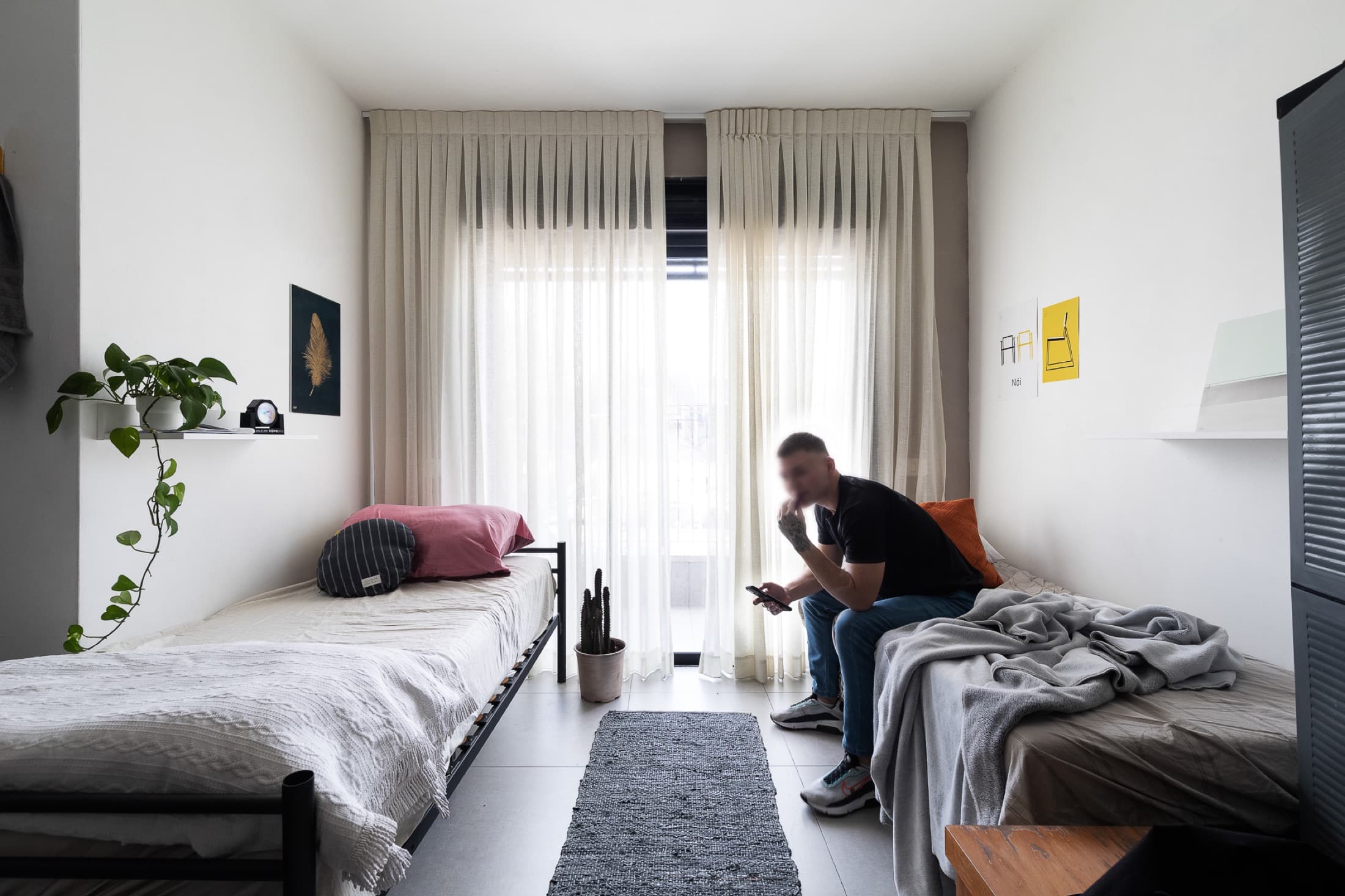
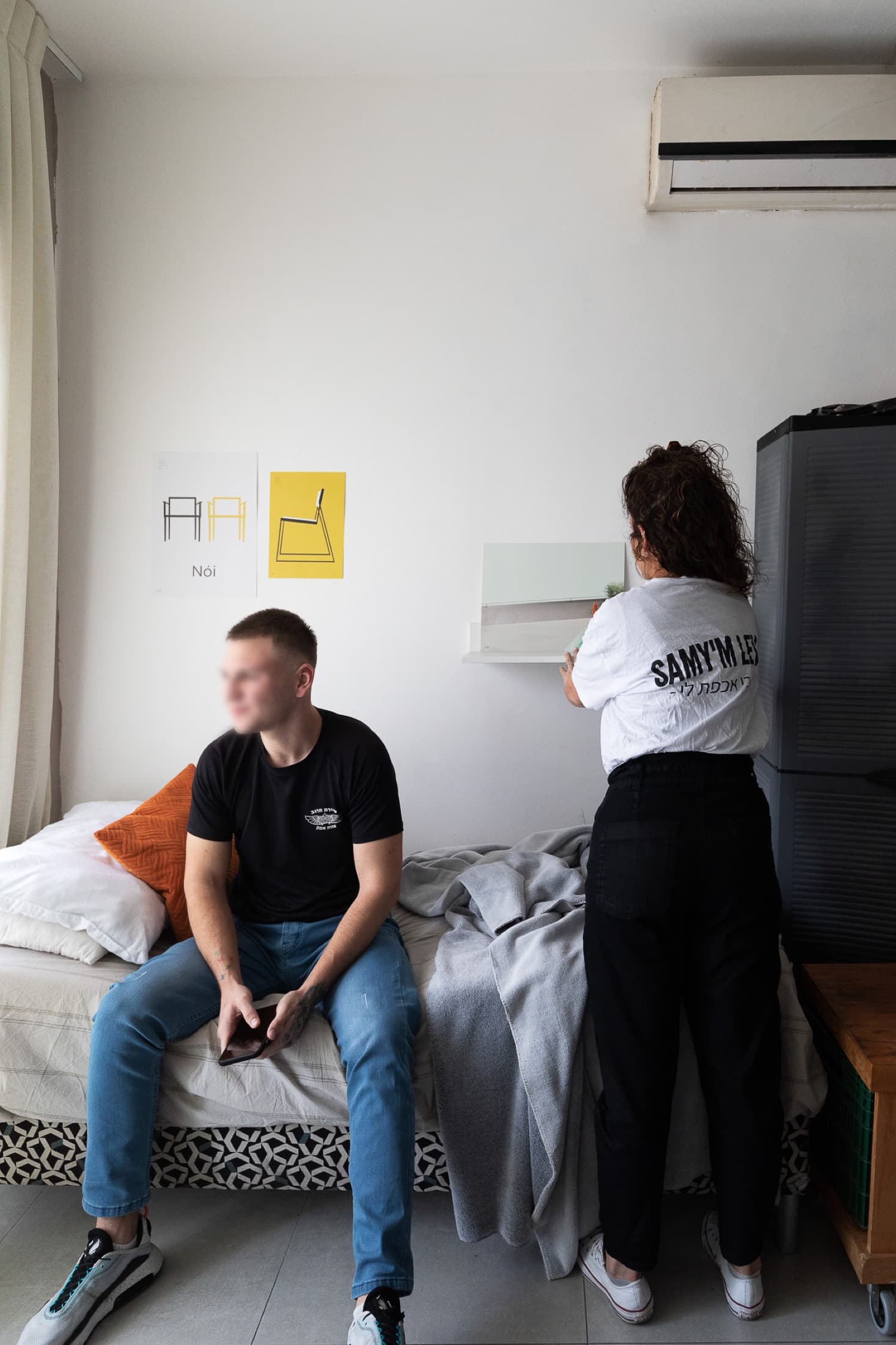
The place is a four-storey building in Tel Aviv, belonging to the Echpat association (אכפת — ‘I care’). It holds twelve rooms of around ten square metres each, a shared kitchen, a basement club and a courtyard. Around twenty-five people living on the street stay here; for many it is the first station on the way back to life. When I arrived, I found chaos: donations piled on the floor, broken furniture, a total absence of colour.
To me, a home is far more than four walls. It is security, belonging, family, memory, a warm enveloping embrace, even a smell — every home has its own. That is what I set out to give this building back.
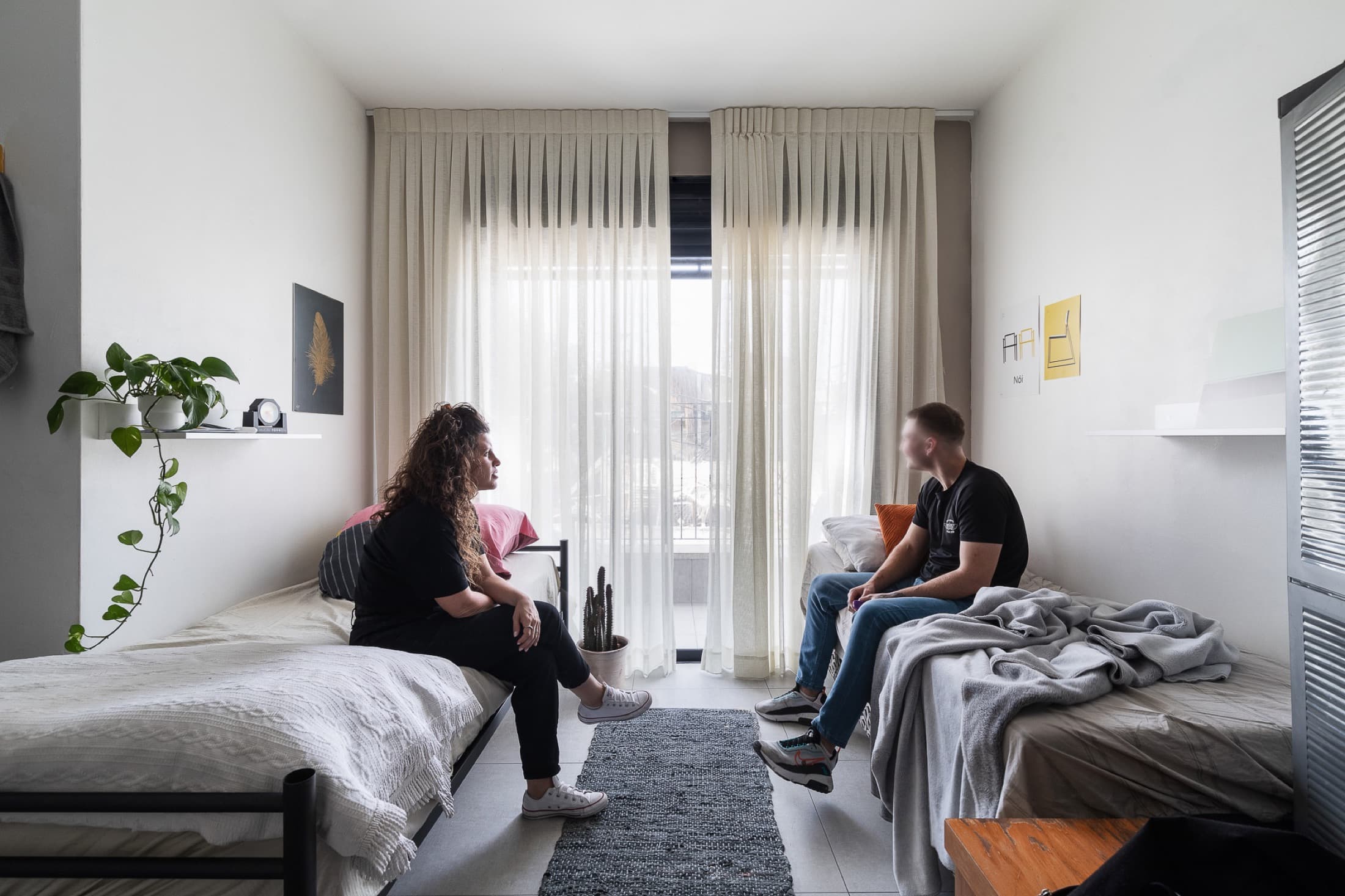
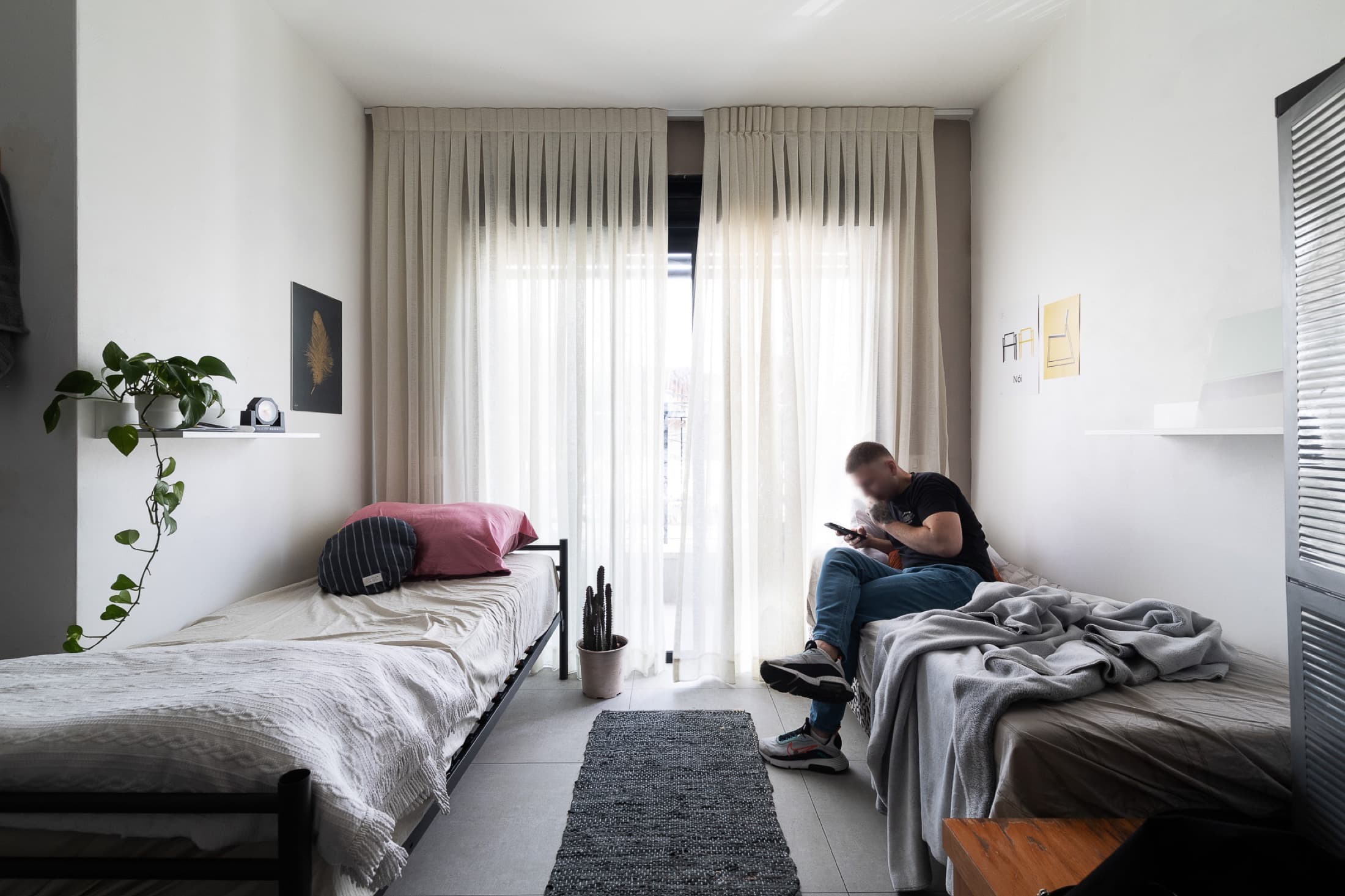
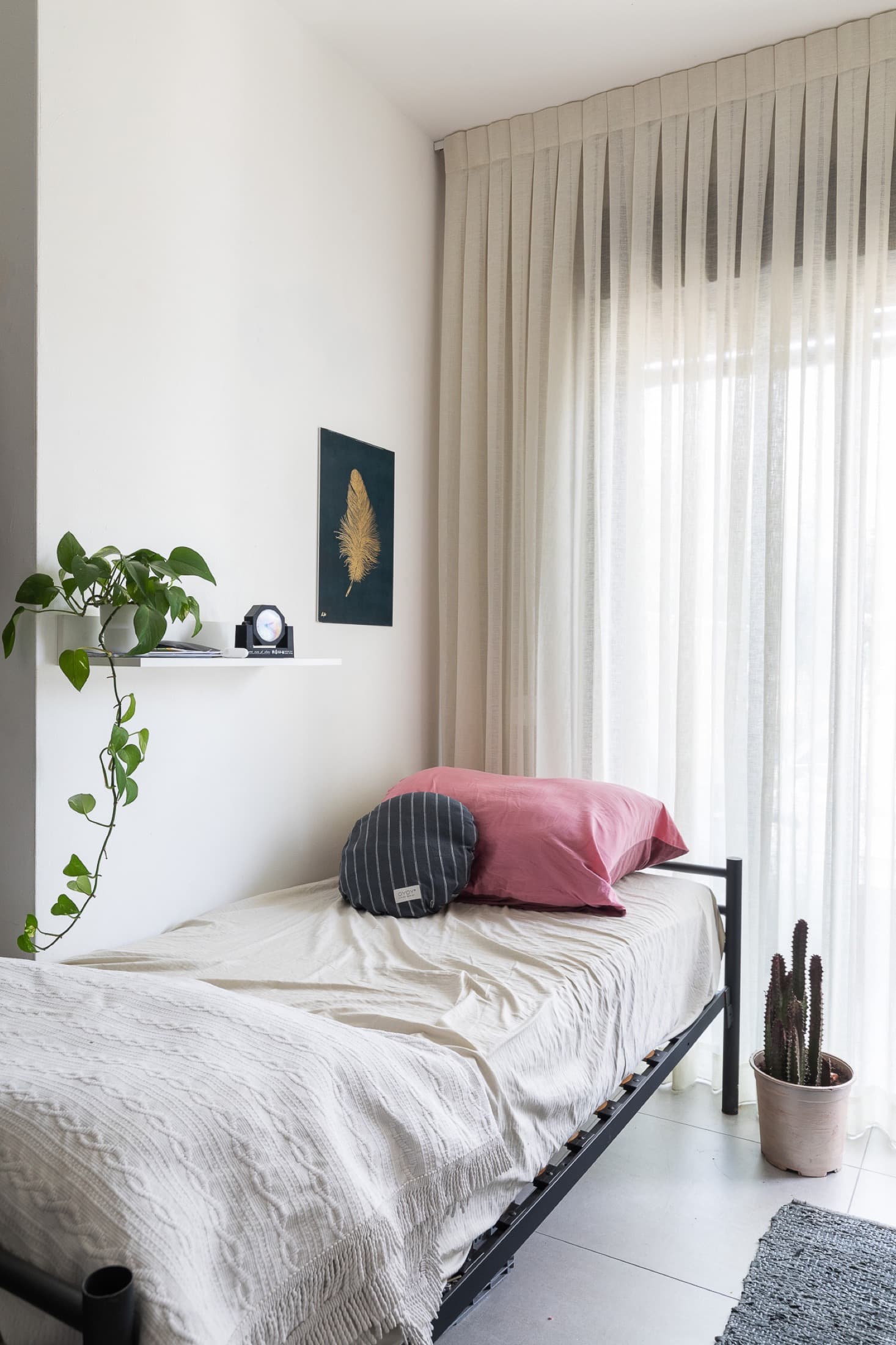
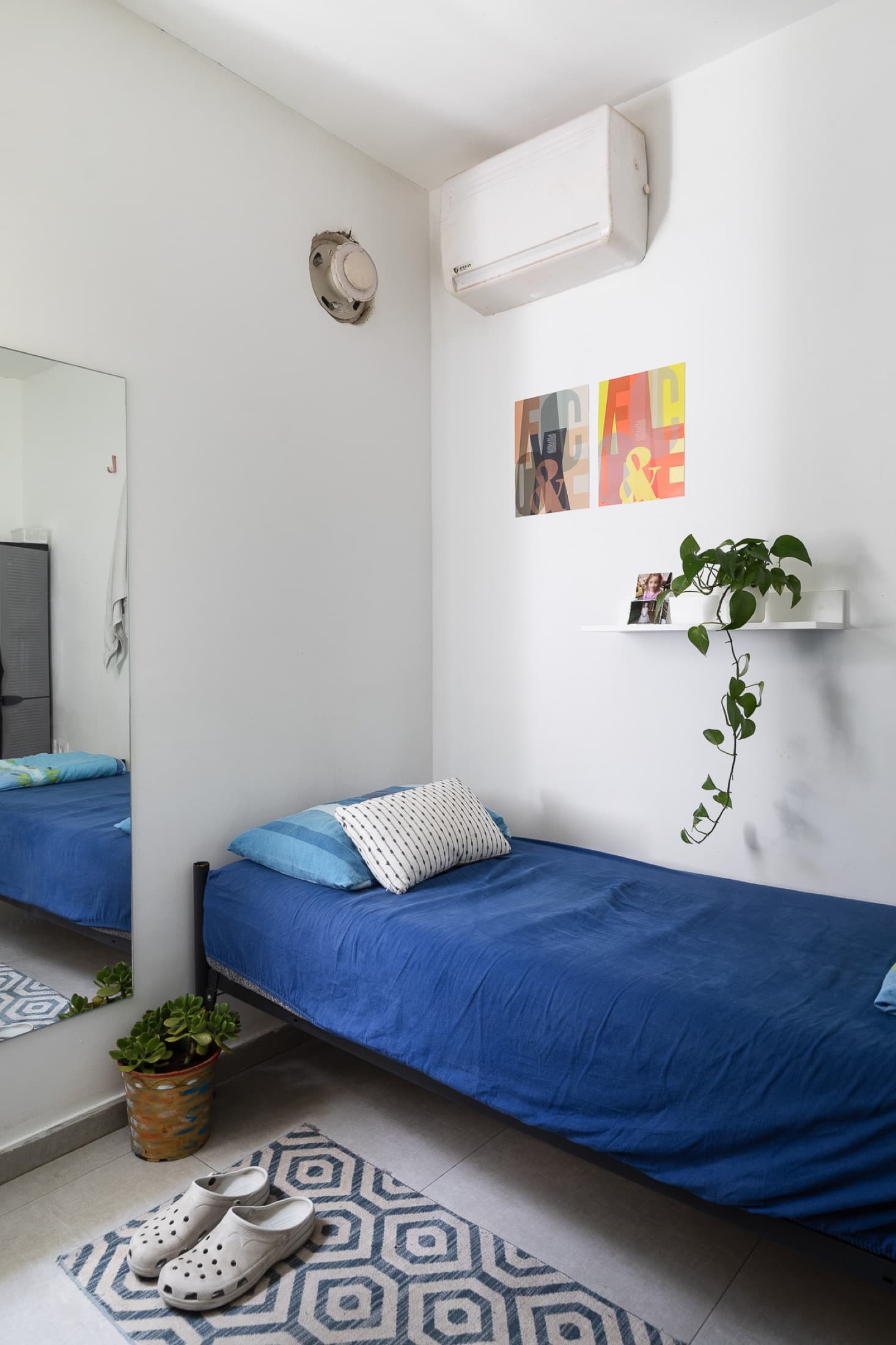
And I did it starting from the smallest things. I installed a shelf beside each bed — something fixed, something of one's own, to give a sense of safety. The next day, someone had placed a photo of his daughter on his shelf. A single shelf was enough for a man to look at his daughter every morning. I hung mirrors, because on the street you stop looking at yourself, and here you are home again. I laid rugs, so the floor would not be freezing, so you could land on something warm when getting out of bed.
I dressed the windows with floor-to-ceiling curtains in two layers — one sheer, one solid — that soften the light and give privacy. I painted every space in clean, uniform tones, and in each room I added plants, warm textiles in pink and orange, and a framed artwork, so that even the smallest corner would feel considered. I renewed the shared lounge with heated flooring, and created a storage room where every donation has its place and its dignity, so each person takes exactly what they need. Outside I placed lockers, so that whoever comes for a single night can protect the little they own. And in the courtyard I raised a living green wall — plants that climb and cascade — so there would also be something to care for and watch grow.
The people who live here are used to being invisible to society. Seeing them moved by their own home, taking part, standing for once at the front and not at the margins — that is what opened my heart the most. This was my tikkun, my circle closed: the home I could not give my father, now given to others who need it. It carries his name and his memory in every corner.
The result
How it turned out
the final set — photographs of the finished space
Your turn
Want a project
like this?
Tell me what you have in mind, and let's give it shape.